
Robotics 2.0 ... finally
Hyundai, Alpha from Humanoid, UMA, Konpanion, Aquaai, Scaling Robotics, AI in Motion, GRC Robotics Conference

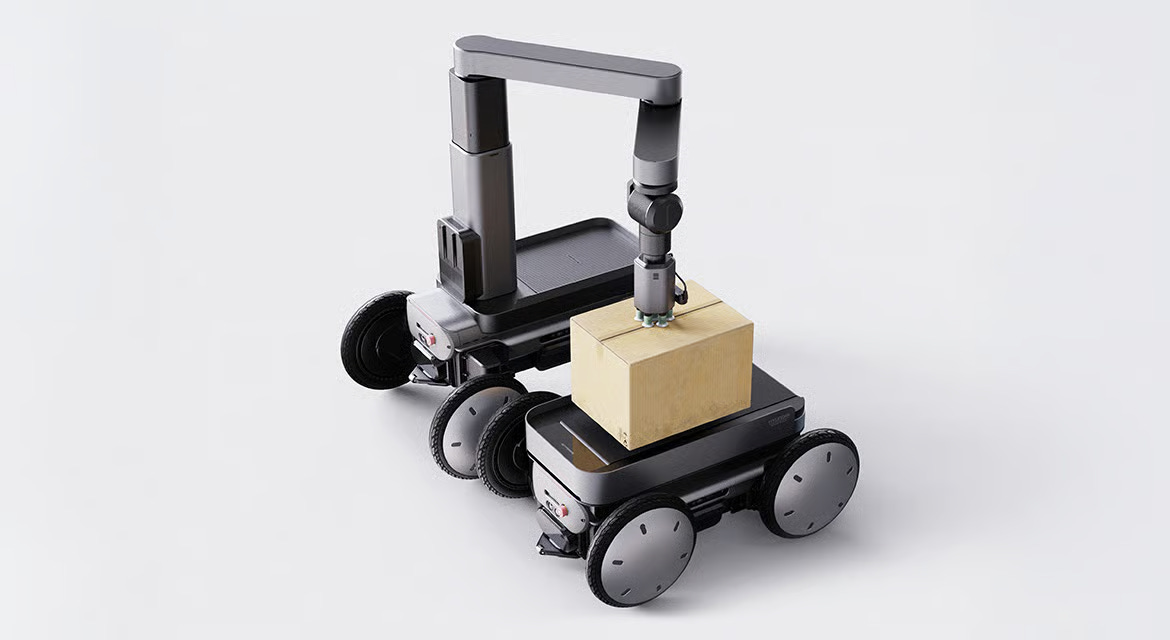
Robotics 2.0 is a term I coined back in 2012 to describe the difference between the robotics surrounding me in Silicon Valley and what was considered to be ‘the robotics industry’. Revenue based robotics was dominated by expensive precise robot arms manufactured primarily in Japan and Europe, and primarily used in industry. These robots were more sophisticated versions of the original programmable industrial robot arms developed in Silicon Valley, the Stanford Arm (or PUMA, Programmable Universal Machine for Assembly) created by Vic Sheinman and commercialized by Unimation which was acquired Westinghouse in 1983, then Staubli in 1988.
As the commercialization of industrial robot arms followed the market (50% automotive assembly, ) it seemed like the center of the robotics world was in countries like Germany, Switzerland, Japan, Korea. The US lagged in adoption and development of robotics technology but concentrations of robotics adoption centered in Michigan, Boston, and Pittsburgh.
Very few people realized that there continued to be a strong ecosystem of robotics in the Silicon Valley region, but barring Intuitive Surgical - still the most valuable robotics companies in the world with a market cap of $200 Billion - there was very little money in robotics in Silicon Valley. Robotics was a small fish in a pond full of bigger, more exciting and more remunerative fish. Elsewhere the robotics industry was a much bigger fish.
Note: compared to the market cap of the internet/social/tech companies like Apple ($4.1 Trillion), Alphabet/Google ($3.9 Trillion), Meta ($1.7 Trillion) etc. Intuitive still looks small.
This was in the early years of the Silicon Valley Robotics organization when our founding companies (like Willow Garage, Bosch, SRI International, Adept Technologies, and Intuitive Surgical) wanted to let the rest of the world know that we built robots too! One of the challenges was that Silicon Valley was developing very different robots to the dominant paradigm.
This was in part driven by robotics startups exploring new markets for existing robotics technologies, but primarily the new paradigm of robots that could navigate in the environment, even from a fixed position, through perception and intelligence. Self-driving cars were the most visible face of Robotics 2.0 but the real traction came in autonomous mobile robots, collaborative robot arms, and even consumer robots. Robotics 1.0 was restricted to robot arms fixed into safety cages, or automated guided vehicles locked onto tracks, but Robotics 2.0 is not limited to any form factor of robot, or any market.
Rodney Brooks foreshadowed the direction of the development of Robotics 2.0 in his 1989 journal paper “Fast, Cheap and Out of Control: A Robot Invasion of the Solar System”. I believe that Robotics 3.0 or Swarm Robotics will be the next iteration, when small autonomous robots start acting together.
SEOUL, December 3, 2025 – Hyundai Motor Group (the Group) today unveiled MobED (Mobile Eccentric Droid), its first mass-produced mobility robot platform developed by Hyundai Motor Group’s Robotics LAB, at the International Robot Exhibition 2025 (iREX 2025) in Tokyo, Japan.
MobED revolutionizes mobile robotics with its cutting-edge eccentric mechanism, enabling precise posture control and seamless terrain adaptability. These features redefine movement across diverse surfaces, powered by the Group’s automotive-grade engineering:
Eccentric Control Mechanism: Actively stabilizes the platform by dynamically adjusting posture and height on uneven or inclined surfaces.
Seamless Terrain Navigation: Effortlessly adapts to varied environments, spanning narrow indoor pathways to rugged outdoor terrains.
Automotive-Grade Engineering: Combines durability with the scalability of laboratory-level precision to real-world applications.
By integrating adaptive motion technology, MobED eliminates the need for environment-specific robot designs.
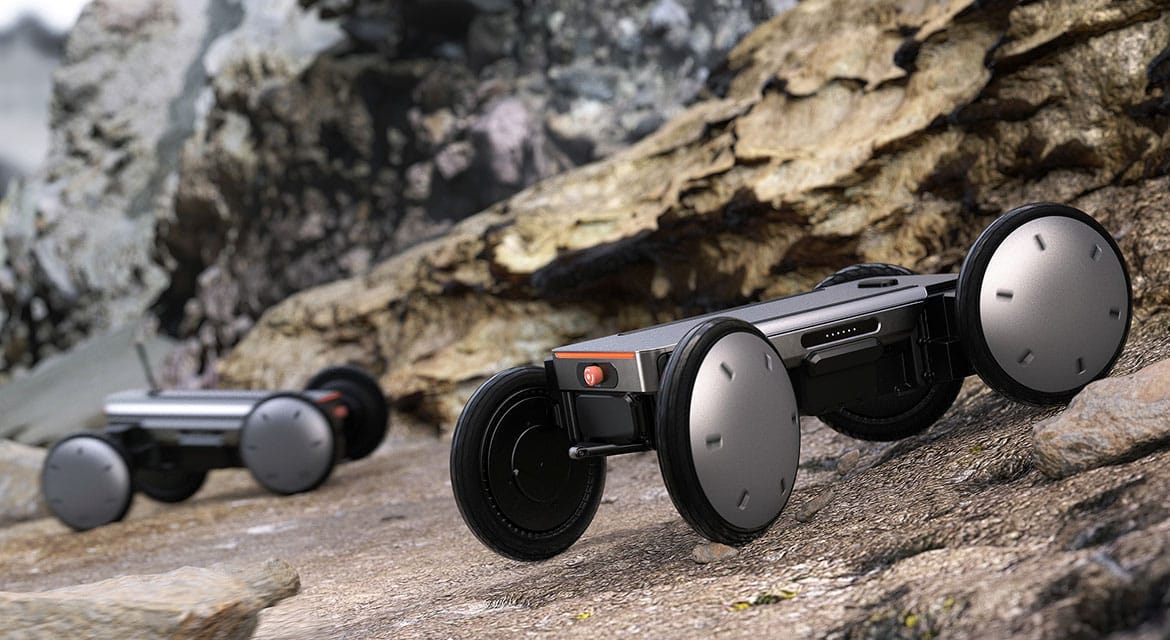
Infinite Journey: A Versatile Platform for Multi-Purpose Applications
Built as a modular platform, MobED supports diverse use cases across industries, from delivery and research to logistics and video production. Key features:
Customizable Modular Design: Supports universal mounting rails and APIs, enabling simple integration of attachments for various tasks.
Indoor and Outdoor Functionality: Operates seamlessly across environments, reducing the need for specialized robots and cutting costs.
Future-Proof Solution: Adapts readily to evolving needs with long-term reliability and robust construction.
With one versatile platform, MobED creates infinite possibilities for robotics applications, offering flexibility and scalability unlike traditional robots.


Vincent Vanhoucke talks to Sergey Levine
From full-time professor to startup co-founder, Sergey Levine is creating better robots at Physical Intelligence. Watch the next episode of AI in Motion, where we hear how generalized robots can make an impact in the office and at home.
Scaling Robotics Episode 1: Joshua Chaitin-Pollak (Kiva, 6 River, ATI) via Vedant Nair
Welcome to Episode 1 of Scaling Robotics! This is a series of conversations with robotics leaders in software, operations, supply chain, and more about their lessons from scaling fleets of robots.
For robots to make an impact on humanity, we must scale to millions worldwide. However, very few teams have ever scaled their fleets of robots, and knowledge of best practices and pitfalls is siloed within a few teams that have achieved this.
Scaling Robotics is an effort to democratize this knowledge to empower robotics teams to scale bigger and faster.

Konpanion via Dr Alexandre Colle, PhD
On Konpanion, we’re moving clearly ahead. We secured a substantial grant, got selected for a potential NHS paid trial (just waiting for the final budget signature), and have started initial user trials but we need capital to expand further. We are genuinely ready to talk about fundraising now.
We focused on the “Living Home,” cleverly splitting our IP. We are merging passive, elegant sensors hidden in things like cushions and rugs, with our active sensor, Maah. It’s the same tech, just separated in different parts to be less intrusive. Honestly, we did this because it’s the most efficient way to gather the necessary data to build out our social care intelligence. This intelligence is driven by our unique software platform. Critically, the architecture is decentralized and cloud-agnostic, with data processing pushed to the edge where possible. This allows us to ensure we are GDPR-compliant by design and maintain robust encryption for all sensitive health data. The traction so far has been excellent. Right now, we are laser-focused on affordable kits for formal and informal care. We’re holding off on chasing interest from child care and mental health because we are simply too stretched.
We have a partner and a small investor in NY, so we can finally open a US company. We are planning to hit the US, UK, and European markets, but we need to ramp up fast.
I am looking for $120K in pre-seed funding to serve as a bridge, making us in a great shape for a $2.2M Seed round in Q2 2026.
Aquaai via Liane Thompson
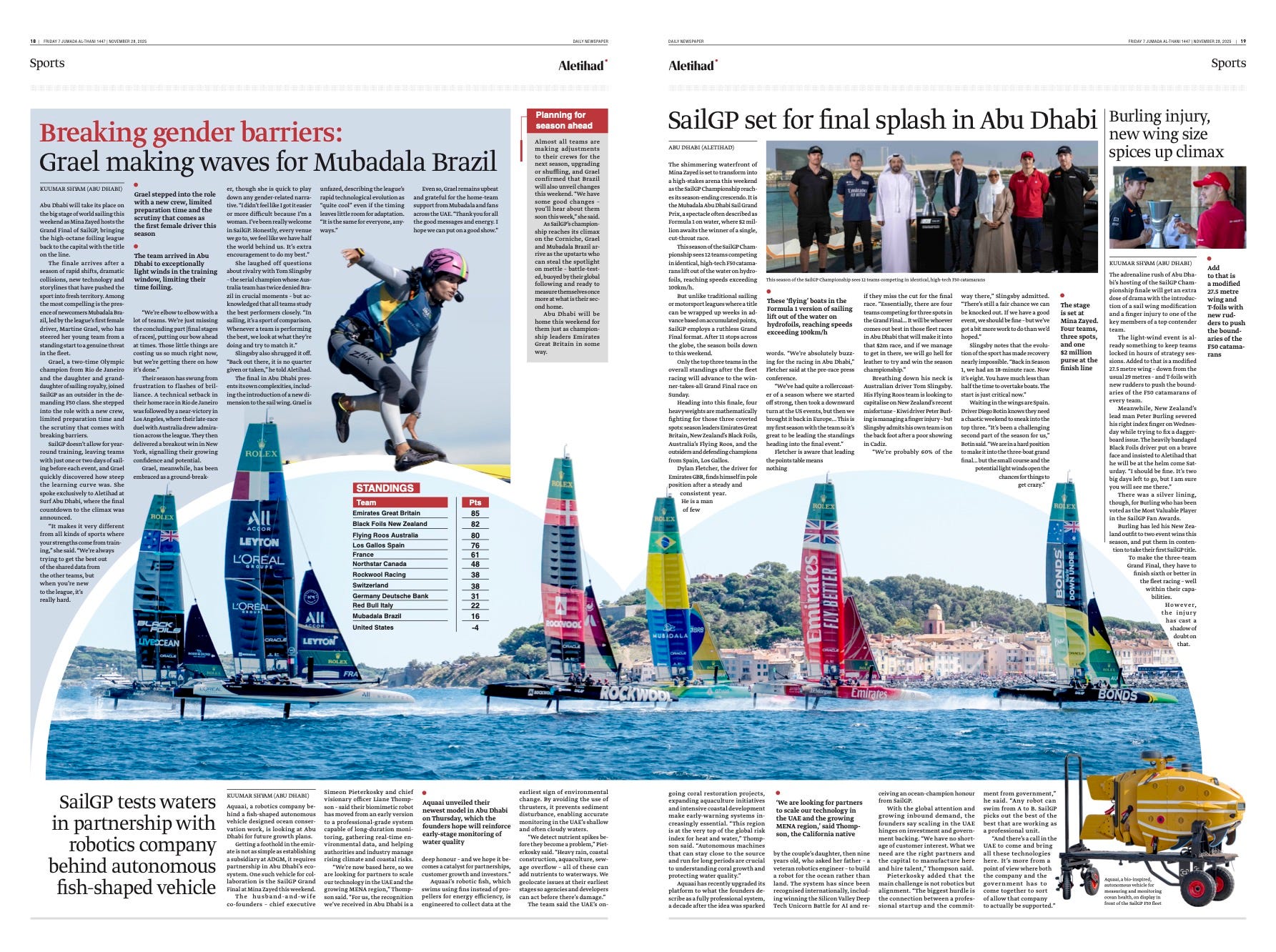
Here’s the announcement on our new partnership with Emirates Airlines and SailGP (the Formula 1 of sailing), along with a video of our latest robot in action.
https://www.linkedin.com/feed/update/urn:li:activity:7402396134758961152/
We’re already in discussions with investors who want to be part of taking this technology global on the 2026 SailGP circuit—where elite sport, frontier tech, and ocean conservation intersect on a world stage.
Our $3.5M round will formally launch in 2026, but we’ve opened a bridge through the end of 2025 for those who want to come in early ($50K minimum, uncapped SAFE with a 20% discount).
My LinkedIN feed has many the posts...
https://www.linkedin.com/feed/update/urn:li:activity:7400773900999077888/
Meet Alpha: The humanoid robot that learned to walk in 48 hours
HMND 01 Alpha Bipedal, developed by UK-based company Humanoid, achieved stable bipedal walking just two days after its assembly - a milestone that typically takes weeks or months in robotics.
From initial design to a functioning prototype, the robot was ready in just five months, compared with the industry average of 18 to 24 months.
UMA.bot out of stealth
At UMA, we develop AI and robotics dedicated to shaping a new economic and societal era. We design general-purpose mobile and humanoid robots with human-level dexterity and a deep understanding of the physical world.
We’re accelerating our development and growing a multidisciplinary, international team. In 2026, we’ll launch several pilot programs in logistics and manufacturing, as a first step towards broader applications.
With this trajectory, we pursue a clear vision: building intelligent robots that enhance quality of life for everyone.
Team
Founders: Remi Cadene, Robert Knight, Pierre Sermanet and Simon Alibert. Advisors include Yan Le Cunn
We are an international and multidisciplinary team with a background in AI and robotics. If you want to be part of this adventure, reach out at uma.bot
Silicon Valley Robotics Investor/Startup Database
Are you a startup fundraising atm? Fill out our "For Investors Eyes Only" sheet.
These investors write checks anywhere from angel and seed stage to $5-50 million.
Feedback from the startups - high quality inbound interest from investors.
Feedback from the investors - incredible depth and range of robotics startups.
If you’re an accredited investor and haven’t already signed up for the spreadsheet - Sign up here for great robotics deal flow!
Robotics News
Humanoids in homes not realistic in coming years, Radford says at Reuters NEXT
December 3, 202511:21 PST
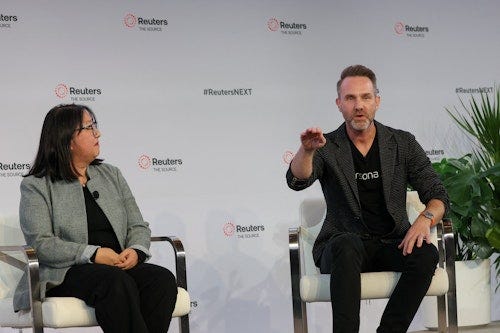
Ju and Radford in New York City, U.S., December 3, 2025. REUTERS/Brendan McDermid
Speaking during a panel on the future of humanoid robots, Persona AI CEO Nicolaus Radford said we “need to have a tempered outlook” on humanoid adoption.
He said the use of human-like robots in homes for tasks like laundry is probably not realistic in the next years, citing “enormous challenges.”
Cornell Tech information science and design tech associate professor Wendy Ju said China could have an advantage when it comes to humanoid robots given its manufacturing prowess.
“One thing that will keep automation from happening is a trade war,” Ju said.
Humanoids: A gimmick or the future?
December 3, 202510:44 PST
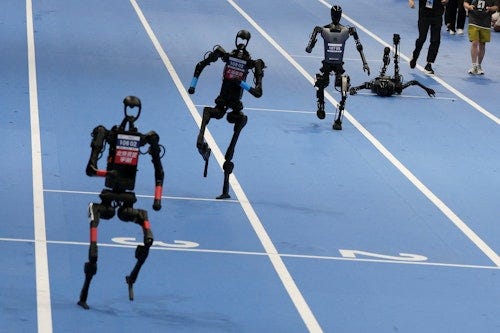
FILE PHOTO: Unitree Robotics and Tiangong humanoid robots, Beijing, China August 17, 2025. REUTERS/Florence Lo
Human-like robots have been touted as the next phase of AI’s imprint on the world, forever changing the way we live, work and play. But does the reality match the hype?
This panel, moderated by Reuters Tech Correspondent Krystal Hu, features:
Cornell University roboticist and Associate Professor Wendy Ju
Ju’s work in human-robot interaction and automated vehicle interfaces looks at how interactive devices can engage people with minimal interruption, according to Cornell’s website.
She joined Cornell after working at Stanford University as executive director of interaction design research.
Persona AI CEO Nicolaus Radford
According to Persona AI’s website, the company is building robots “to take on the heavy industry 4D jobs — dull, dirty, dangerous and declining — so that humans don’t have to.”
Before Persona AI, Radford was a venture capitalist, founded Nauticus Robotics and worked as an engineer at NASA.
More robotics news
After AI push, Trump administration is now looking to robots - Politico
AI robots get greenlight from SoftBank and Yaskawa - Capacity
Meet Alpha: The humanoid robot that learned to walk in 48 hours - EuroNews
The Data on Self-Driving Cars Is Clear. We Have to Change Course. - NYTimes
Why Autonomous Vehicles Need Billions of Miles Before We Can Trust the Trend Lines - CleanTechnica
Waymo shuts down ‘can’t scale’ argument with quick test to fully autonomous in Texas - electrek
The accelerator is on the floor for autonomous vehicles - TechCrunch
Waymo investigation could stop autonomous driving in its tracks - TheStreet
China’s Most Updated Autonomous Driving Framework Makes Both Carmakers & Operators (Owners Included) Liable in a Crash - CleanTechnica
Autolane is building ‘air traffic control’ for autonomous vehicles - TechCrunch
Unitree’s Bipedal Robot Design Patent Granted, Targeting Inspection and Security Applications - Pandaily
Samsung’s Ballie robot is delayed again – and now we know why - TechRadar
Scientists Develop an Octopus-Like ‘Soft Robot’ That Can Change Color - CNET
NASA’s Fly Foundational Robots Demo to Bolster In-Space Infrastructure - NASA
I Tasked Rival Robots With Cooking My Thanksgiving Dinner - Wired
Kubota, Kilter to partner on next-generation autonomous farm robot - electrek
Growing robotics scene in Singapore, but issue of talent remains - Channel News Asia
Nvidia’s CEO says AI adoption will be gradual, but when it does hit, we may all end up making robot clothing - Fortune
Robotics Gordon Research Conference
via Vijay Kumar:
I am looking forward to the Gordon Research Conference (GRC) in Robotics that I am co-organizing with Auke J. Ijspeert in Ventura, California, January 11-16 2026. This year’s conference will focus on adaptive behavior and learning in animals and robots. The call for participation and for posters is open. Please apply soon, as the total number of participants is limited. Join us for a dynamic exchange of ideas at the intersection of robotics and biology, where engineering meets evolution. Applications to attend close Dec 14
Join the organizing team at Silicon Valley Robotics - bots&beer@svrobo.org


Your framing of Robotics 1.0 (arms in cages) vs 2.0 (perceptive, environment-aware systems) really resonates with what we’re seeing in clinics, homes and community settings. The next big test isn’t just clever prototypes or humanoid demos, but whether we can safely scale these “fast, cheap and out of control” robots into regulated, real-world workflows at human scale – that’s the bridge we need to cross before we earn the right to talk seriously about Robotics 3.0.
If you follow the European robotics sector, you’ll notice that most of its companies are all entering the scale-up phase at the same time. Quite interesting, and I'm wondering if it’ll be sufficient to catch up the US and China or most of these companies will be acquired.